

A historic sanctuary became the visual canvas for a modern conference.
TRINITY ANNUAL CONFERENCE, SHREVEPORT: architectural projection mapping and wireless lighting gave a century-old room new visual energy without concealing its character. Dedicated feeds served web, overflow, and online audiences across three days and 1,200 attendees.
Conference attendees
program
not covered
web, overflow, online
The sanctuary was not a neutral venue. Its century-old architecture needed to remain central to the experience.
The challenge was one of restraint. The conference needed contemporary energy and clear sightlines for a large in-person gathering, plus a clean feed for audiences who could not be in the sanctuary. None of that could come at the expense of the venue’s classic character.
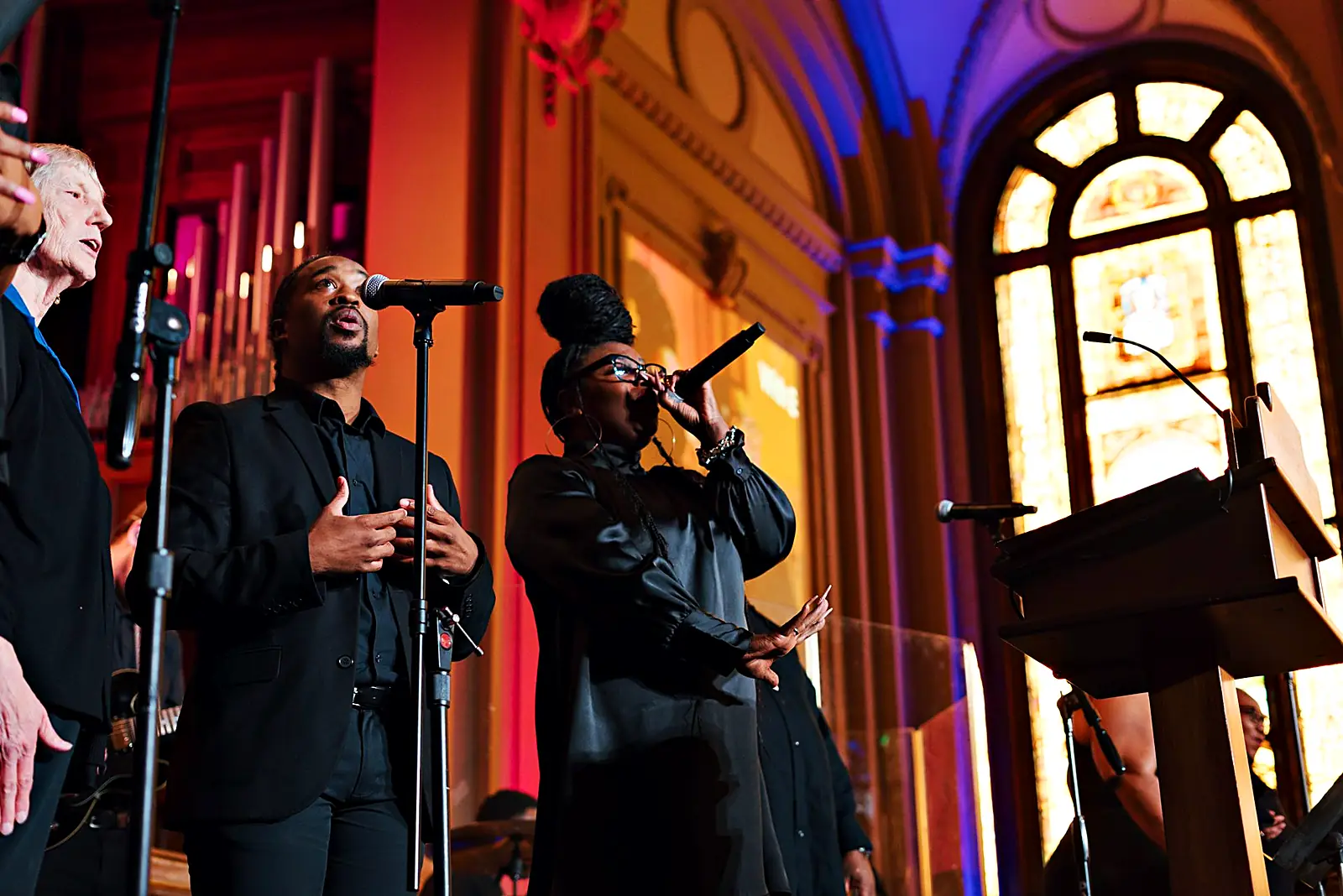
Projection mapping used the building’s own lines and surfaces as the visual canvas.
Wireless dynamic lighting carried the ambience. Untethered fixtures let us shape color and mood across the room and shift it as the program moved, without running cable through a century-old sanctuary.
Beyond the room, we produced dedicated content for three distinct audiences, one each for web, overflow, and online, so attendees outside the main hall received a feed built for them, not an afterthought.
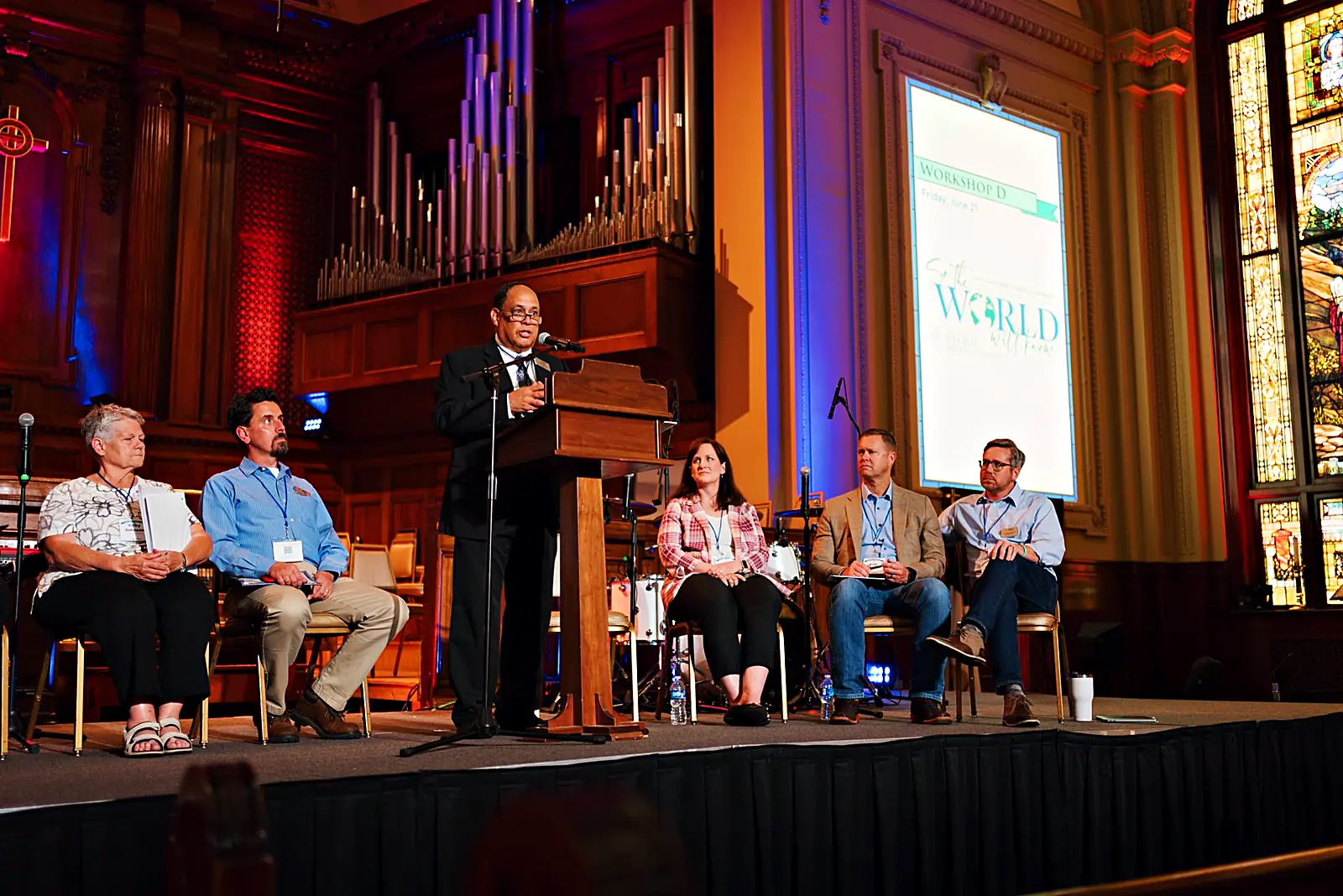
Across three days, the Trinity Annual Conference welcomed 1,200 attendees to a sanctuary that looked contemporary and entirely itself.
Projection mapping and lighting introduced movement and visual scale while the historic architecture remained the defining feature of the room.
Dedicated web, overflow, and online content extended the program beyond the sanctuary, giving each audience a feed designed for the way they joined.
The results impressed our clients and wowed 1,200 event attendees. Rarely have I found a media vendor more personable and knowledgeable, and we’ll continue to call on Space City as a trusted partner.
How can the production elevate what already makes the venue distinctive?
Share the program objective, audience, date, venue or market, and known constraints. We will review the brief, identify open assumptions, and confirm the next working step.