

Make the room sound clear, feel composed, and respond to the show.
System design begins with room geometry, audience coverage, program content, camera requirements, RF conditions, venue rules, and schedule. Prediction, measurement, programming, staffing, rehearsal, and onsite tuning brings the show to life.
We tune corporate event audio in the room it has to fill.
System choice is the beginning, not the result. Coverage, speech intelligibility, music, RF, room acoustics, camera feeds, and show content are considered together, then the system is measured and tuned in the actual space before the audience arrives.
- Line-array systemsSystem selection and coverage modeling based on room geometry, audience areas, content, and venue conditions.
- RF coordinationWireless frequencies, microphone assignments, monitoring, and backup requirements planned for the speaker and talent roster.
- Broadcast audioDistinct mixes and routing for the room, stream, record, interpretation, press, and accessibility paths defined for the program.
- Language supportInterpreter, booth, channel, routing, monitoring, and recording requirements coordinated with the client and venue.
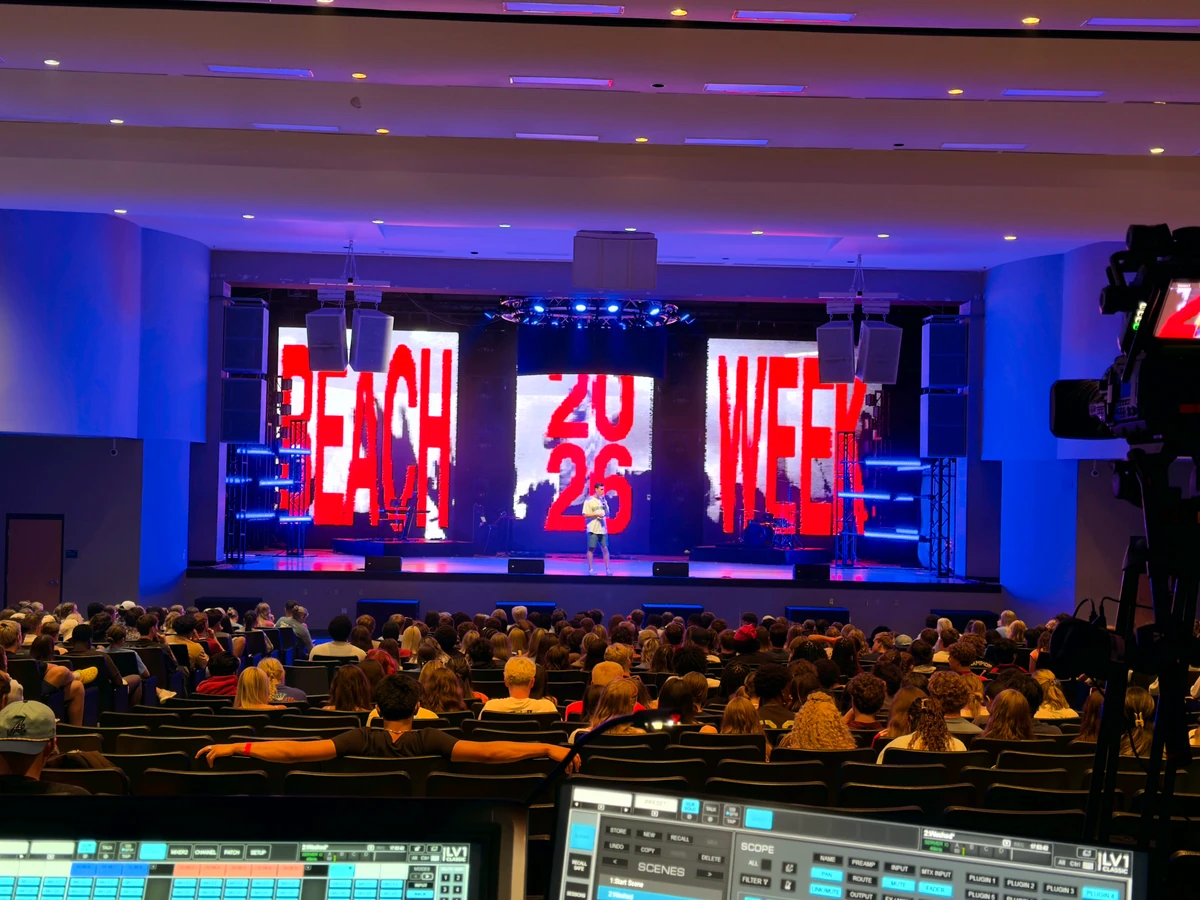
Lighting is designed to the arc of your program.
Lighting establishes the visual rhythm of the program, supports the people onstage, reveals the environment, and protects the camera image. Looks and transitions are developed from the storyboard and refined through programming and rehearsal on the approved set.
- Automated FixturesRobe, Ayrton, and Martin moving heads. Spot, wash, and beam coverage matched to scenic.
- Key & Fill for BroadcastKey and fill tuned to match camera exposure and white balance, so faces read clean on IMAG and the stream.
- Scenic LightingUp-lights, architectural washes, and branded gobos. Ambient lighting designed around the room’s bones.
- Lighting Design & OperatorgrandMA3 / Chamsys consoles. Cue-list built during design, rehearsed live, operated in comms.
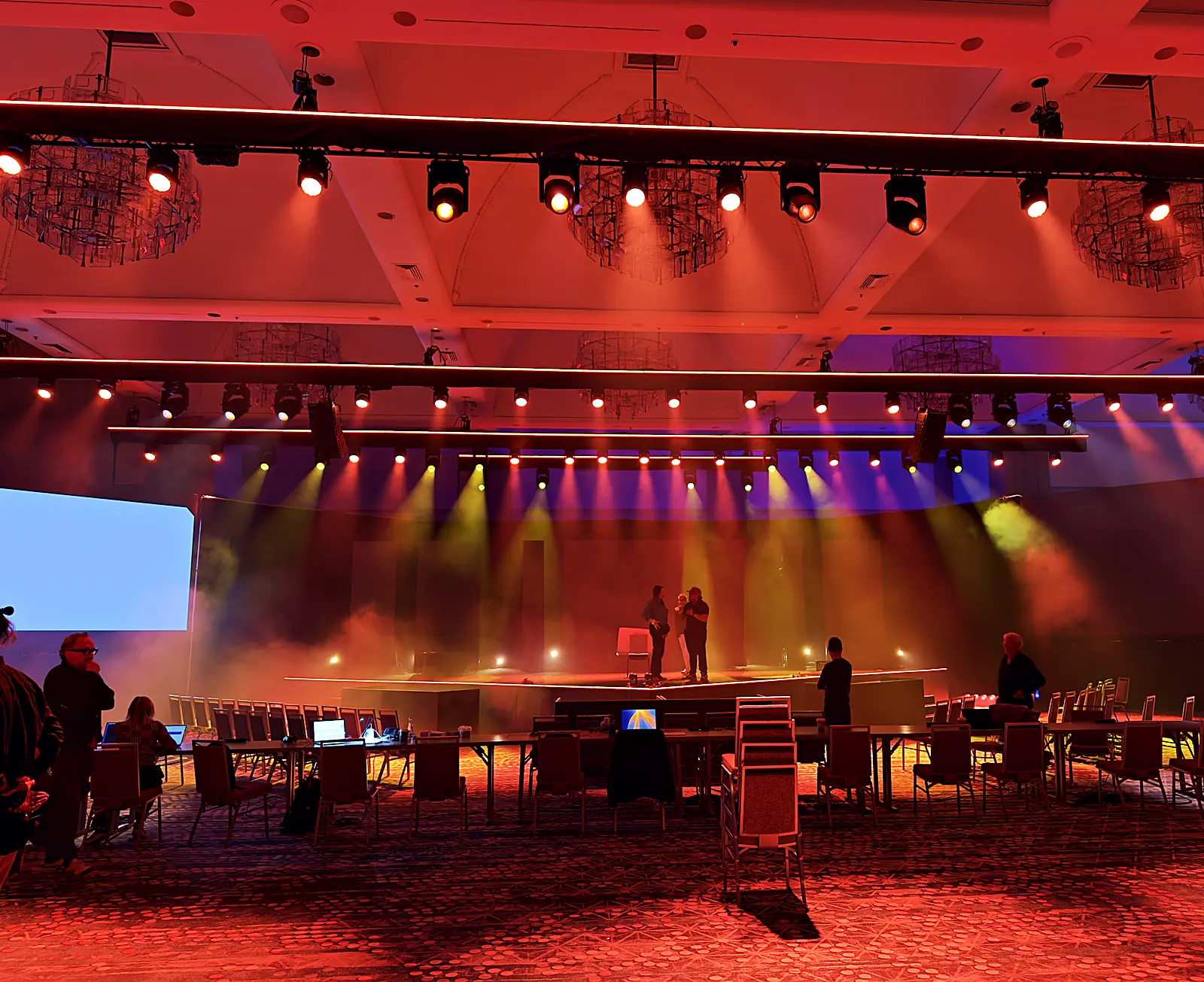
Audio and lighting cost depends on the room, audience, program, rehearsal schedule, system design, RF environment, rigging, labor, camera requirements, venue services, and number of show days. Published planning bands provide context; the proposal states whether programming, rehearsal, rigging, venue services, and show-day labor are included. Review the investment guide.
We work with professional systems from manufacturers including L’Acoustics, d&b audiotechnik, and Yamaha. Selection follows room geometry, acoustics, audience areas, content, camera and broadcast requirements, venue conditions, and the operating plan rather than a fixed package tier.
Yes. Audio timing, screen position, camera exposure, lighting looks, playback, and show cues are coordinated during design and rehearsal so the room and the camera receive a consistent live experience.
Yes. Looks, transitions, timing, console operation, and rehearsal requirements are developed against the storyboard and run of show. The proposal identifies the programming, operator, rehearsal, and show-day responsibilities for the engagement.
Yes. Flown loads are coordinated through the venue’s rigging and engineering process. The plan identifies drawing, motor, inspection-record, approval, labor, and submission requirements against the venue schedule.
Design the room for how the audience will see, hear, and experience the program.
Share the room, program, audience, and date. We will discuss the listening and visual experience, likely system approach, crew requirements, schedule, and a realistic planning range.