

Audience engagement is not a reading that production can infer from a quiet room, a busy chat, or an applause cue. A useful production framework begins with narrower questions: Can people see the presenter and content? Can they understand the speech? Can they follow transitions, use the participation channel, and reach the experience in the format they need?
These are observable conditions, not proof that a message was remembered, believed, or acted upon. Program owners still own the content objective and measurement plan. Production uses the observable signal in the room to decide what should be tested, changed, or documented.
Separate audience conditions from audience outcomes
A person who does not submit a question may still be following closely. A full participation queue may reflect clear instructions, a large audience, or a format that favors quick responses. Neither observation establishes whether the program changed understanding or behavior.
The practical distinction is simple. Production records what can be seen or tested during planning, rehearsal, and the live program. The program owner decides how those observations sit beside surveys, session data, business measures, or other evidence. No single screen, lighting look, room configuration, or cue causes engagement by itself.
Test sightlines, IMAG, and content readability as separate conditions
A sightline test asks whether heads, columns, scenic elements, cameras, or room geometry block the presenter or a required display from representative seats. The observable signal is the obstruction itself. It can inform stage height, screen position, seating release, camera position, or a different room orientation.
IMAG, the live image of a presenter or participant on a display, solves a different problem. Watch from side, rear, and low viewing positions. If the face is too small, the shot is unavailable when the program needs it, or the on-screen image conflicts with the stage eyeline, the camera plan, shot list, lighting, or display allocation needs review. IMAG is not automatically necessary in every room.
Content readability deserves its own test with the actual presentation templates and media. If essential type, labels, data, captions, or demonstrations cannot be read from the planned seats, the signal informs content density, type scale, contrast, canvas layout, display size, or the decision to provide the material through another channel.
Listen for intelligibility and record transition evidence
Speech intelligibility is more specific than loudness. Use spoken program material in representative audience positions and listen for masked words, uneven coverage, reflections, background noise, or microphone changes that make speech harder to understand. That signal can inform loudspeaker coverage, delay, microphone choice, presenter position, room-noise coordination, and the rehearsal test plan.
Pacing and transitions can be observed in the rehearsal record and show log. Unplanned holds, repeated resets, late media, unclear handoffs, or segments consuming the next transition's time are signals. They inform cue ownership, presets, speaker movement, content readiness, buffer placement, and whether the program order needs to change. A fast program is not inherently better; the intended cadence should have a clear reason.
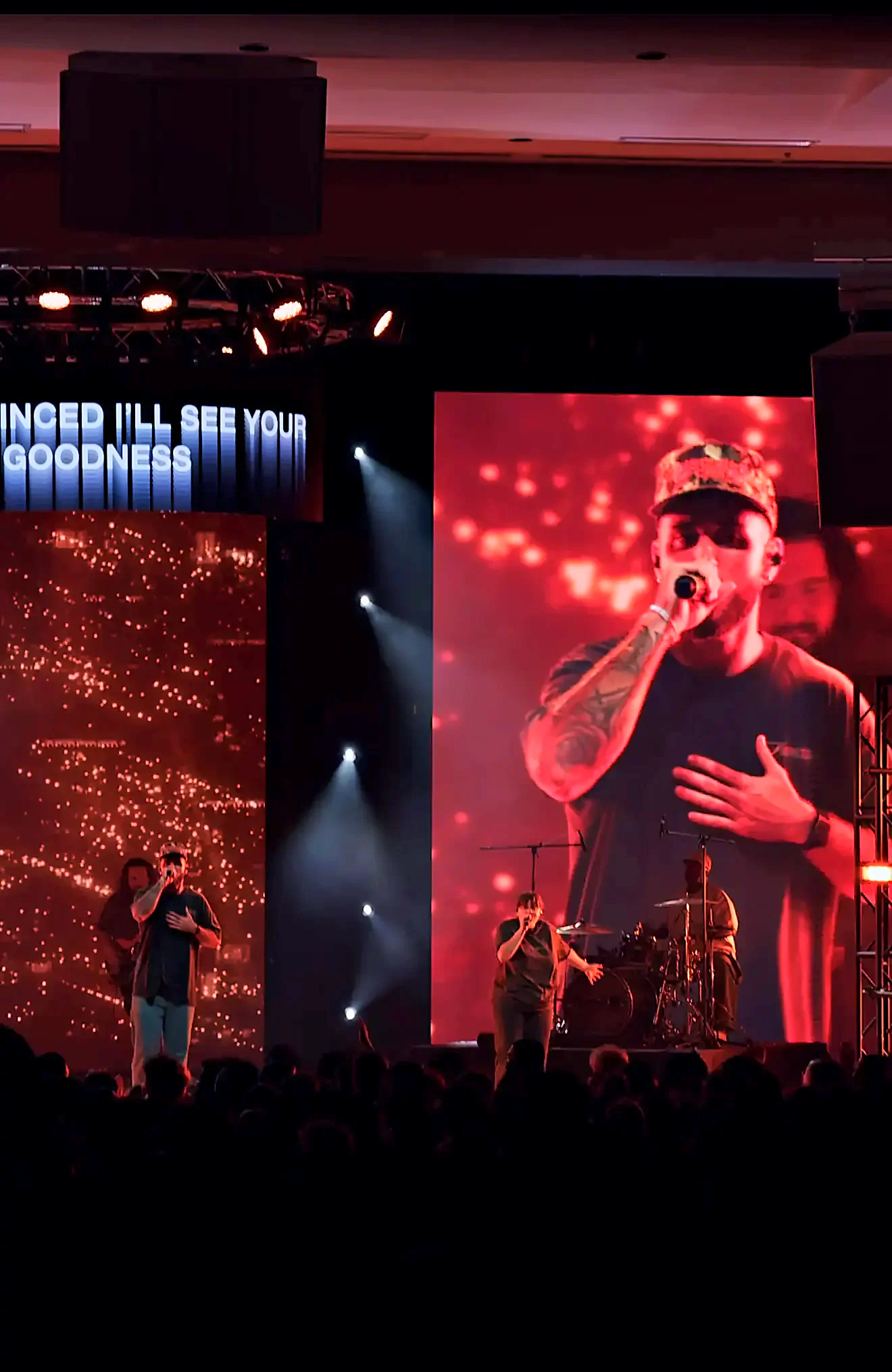
Read room configuration, accessibility, and participation together
Room configuration determines more than capacity. Tables, aisles, stages, control positions, scenic elements, cameras, and service paths affect viewing, movement, participation, and the approved accessibility plan. A blocked route, a caption display outside the expected eyeline, or an interpretation position without a usable view is an observable signal. It informs seating, display, route, feed, staffing, and timing decisions with the responsible venue and program owners.
Participation should be tested as a complete exchange. Can people find the channel, submit a response, receive instructions in the intended format, and see that the session has moved on? Can moderators see the queue and make a selection? Submission counts, abandoned demonstrations, unanswered requests, or repeated instructions are signals that can inform format, moderation, time allocation, staffing, interface placement, or a simpler participation method.
Use one observable signal to inform one accountable decision
This matrix keeps a room observation from becoming an unsupported conclusion about the audience. Define representative positions and required access formats for the engagement, record the source and test date, and name the owner who can accept the decision.
| Condition | Observable signal | Production decision it informs | Evidence to retain |
|---|---|---|---|
| Sightlines | Presenter or required display is obstructed from a representative seat | Stage, screen, camera, scenic, or seating position | Dated room plan and seat-view record |
| Speech intelligibility | Spoken test material is masked, reflected, or uneven in a defined zone | Coverage, delay, microphone, presenter position, or noise-control plan | Test positions, material, conditions, and notes |
| IMAG | Required face, detail, or action is not usable from planned seats or at the needed cue | Camera position, shot list, display allocation, or stage lighting | Camera and display test record |
| Content readability | Essential type, data, labels, captions, or demonstration detail cannot be read | Template, density, contrast, canvas, display, or alternate delivery | Approved content sample viewed in the room |
| Pacing and transitions | Rehearsal or show log records holds, resets, late media, or unclear handoffs | Cue owner, preset, speaker path, buffer, or program order | Timed rehearsal and show-call notes |
| Room configuration | Layout creates an obstructed view, route, service interface, or participation point | Orientation, seating, stage, aisle, camera, or control position | Approved room plan and walk-through record |
| Accessibility | An approved access format, route, view, listening method, caption, or interpretation feed is not usable | Position, routing, display, equipment, staffing, or timing | Requirement owner, test method, and approval status |
| Participation | People cannot find, use, or complete the intended exchange, or moderators cannot manage it | Instructions, channel, moderation, time, staffing, or format | Test responses and live participation record |
Use the matrix before content lock, again in rehearsal, and during the live program where observation is appropriate. It supports production decisions. It does not replace audience research or assign a business result to production.
Turn the room plan into a testable audience-conditions record.
A seating layout, content sample, agenda, participation format, and approved access requirements are enough to begin mapping representative positions, tests, owners, and open decisions.