

A trade-show ROI framework with clear measurement ownership.
Production can influence whether an experience is visible, usable, participatory, and recordable. It does not by itself establish revenue attribution. A shared measurement plan keeps those responsibilities clear.
Trade-show ROI is a cross-functional measurement question. Production can influence sightlines, access, dwell opportunities, participation, demo flow, session conditions, content capture, and the quality of observable moments. Marketing, sales, registration, CRM, finance, and analytics stakeholders own other parts of the record. The useful work is to connect those parts without claiming the build caused a commercial result.
Define the business objective and audience segment together
The client or lead agency should name the business objective, the priority audience segment, and the action that may occur after the event. Production needs that direction to shape the environment, but the commercial target and its definition belong to the business stakeholders who own the program.
Replace broad goals such as engagement or awareness with a planning statement: priority account visitors should be able to find the relevant demonstration, participate without unnecessary delay, and leave with the agreed next step recorded in the appropriate business system. This is a design brief, not a promise of conversion.
Choose observable signals production can support
Experience signals sit close enough to the event environment to inform production decisions. Useful candidates include dwell at a defined zone, participation in an interaction, demo throughput, session attendance, content use, and captured moments approved for later use.
Each signal needs an operational definition. Dwell might mean time inside a specified zone, not general aisle traffic. Demo throughput might mean completed demonstrations, not people who passed a screen. A captured moment might require consent, a usable recording, and approved metadata. The definition determines the layout, technology, workflow, and evidence needed.
Document the systems and owners outside production
Marketing should define campaign membership, audience segmentation, content use, and the reporting question. Sales should define qualification, opportunity acceptance, follow-up stages, and pipeline review. Registration should own attendee identity and attendance rules. CRM and analytics owners should govern identifiers, integrations, attribution logic, data quality, consent, and reporting windows.
These functions may be held by the client or an agency partner. Name the accountable role, the system of record, and the handoff for each measure. Production should not be treated as the owner of CRM completeness, sales follow-up, campaign attribution, opportunity value, or revenue reporting.
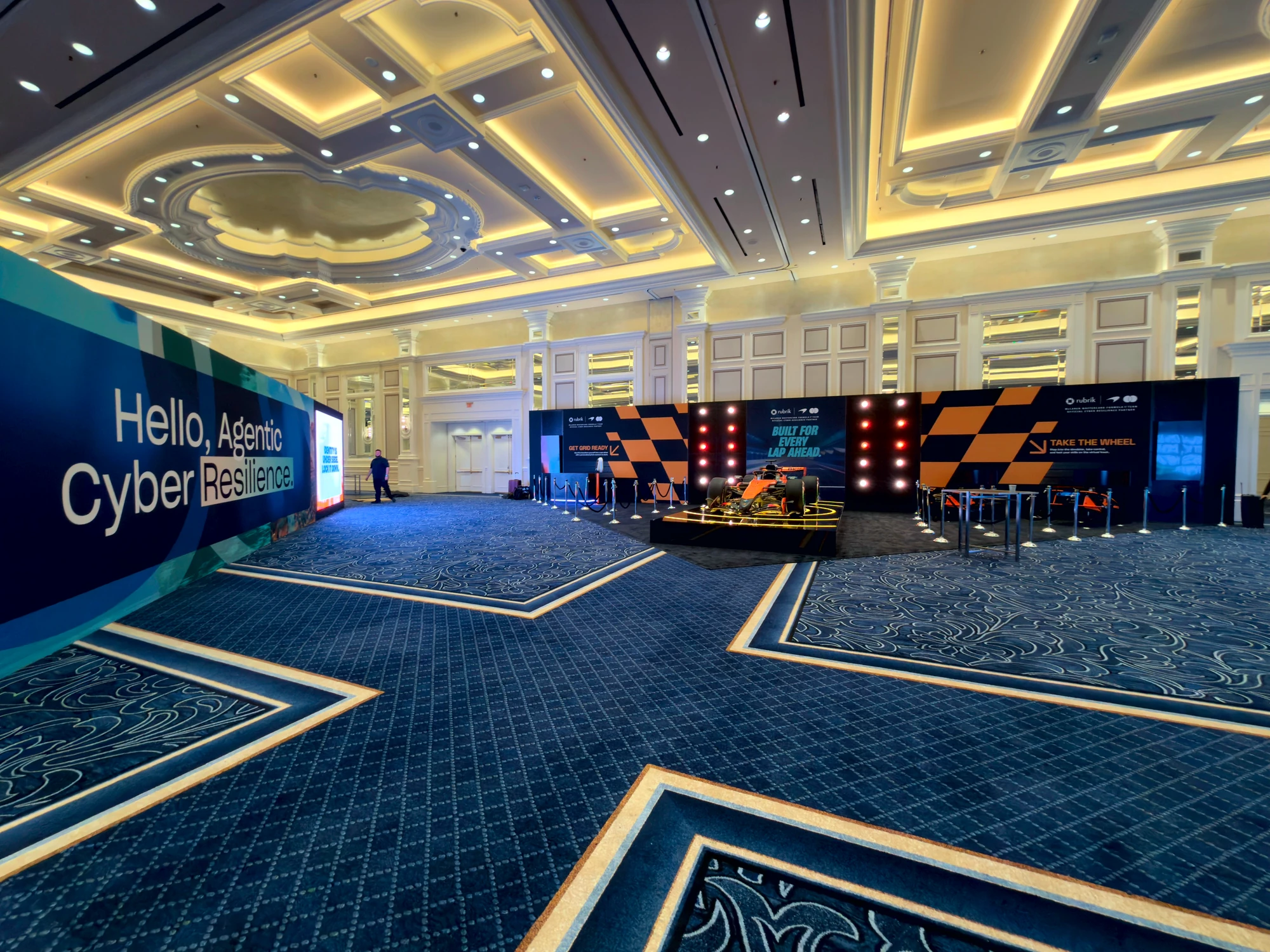
Connect production decisions to the measurement plan
If dwell is meaningful, define the zone and design its capacity, entry, exit, sightlines, accessibility, and observation method. If demo throughput matters, define the demonstration length, reset needs, queue, handoff, and completion record. If session attendance matters, align room access and scan rules with registration. If content use matters, establish capture permissions, formats, metadata, and the handoff to the content owner.
This connection supports better evidence. It does not prove that a wall, stage, demonstration, or captured session caused an opportunity or revenue outcome. Attribution requires the client-approved method, connected records, review window, and appropriate marketing, sales, CRM, analytics, and finance ownership.
Review the chain without collapsing it
- Confirm whether the experience signal was recorded as defined and note any coverage limitation.
- Reconcile registration, scanning, content, campaign, CRM, and sales records using the identifiers approved by their owners.
- Review production conditions that may have affected access, visibility, participation, throughput, session delivery, or capture quality.
- Let marketing, sales, CRM, analytics, and finance stakeholders apply the approved attribution and pipeline methods.
- Record decisions for the next program, separating observed signals, stakeholder interpretation, and commercial outcomes.
That sequence lets production learn from the experience while respecting the boundary between an observable event condition and a business result.
Trade-show measurement responsibility matrix
Adapt this matrix before design approval. Every row needs a definition, system of record, accountable owner, and review timing.
| Signal or record | System of record | Owner | Review timing |
|---|---|---|---|
| Dwell or participation in a defined experience zone | Approved observation, sensor, interaction, or event-platform record | Client or agency experience-measurement owner, with production supporting the defined condition | Daily quality check and post-event review |
| Demo throughput and completion | Demo booking, check-in, product, or approved event record | Product marketing, demo-program, or sales enablement owner | During show operations and after reconciliation |
| Session attendance | Registration, access-control, or session-scanning platform | Registration or event operations owner | After each session where practical and after data reconciliation |
| Content use and captured moments | Content management, media asset, consent, and campaign records | Marketing, communications, legal, and content owners as applicable | At capture handoff, approval, publication, and campaign review |
| Qualification, follow-up, opportunity, pipeline, and revenue | CRM, sales engagement, finance, and approved attribution reporting | Sales, revenue operations, marketing operations, analytics, and finance | At the stakeholder-approved follow-up and reporting windows |
Bring the objective, audience segment, experience signals, and responsibility matrix.
Share the show, footprint, audience journey, observable signals, and the systems and stakeholders that own business measurement. The production discussion can then focus on conditions the experience must support.